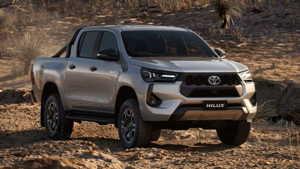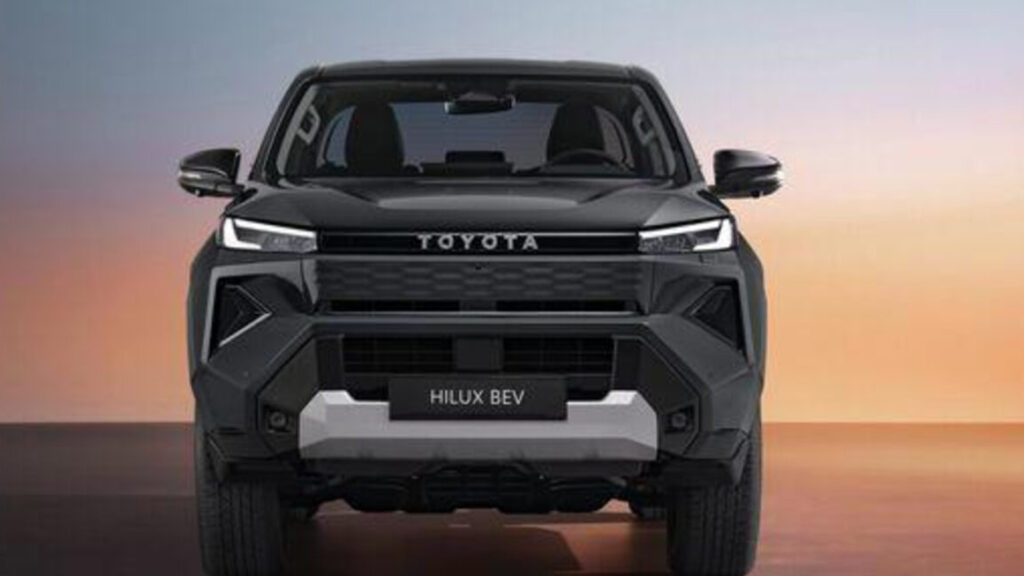
Toyota motor has officially taken the wraps off the ninth-generation Hilux and plan to launch Toyota Hilux EV by early 2026, ushering in a new electrified era for its iconic global pickup. For the first time in its storied history, the Hilux lineup now includes a battery electric version (BEV), a 48V mild-hybrid diesel, and an upcoming hydrogen fuel cell model, expanding Toyota’s multipath approach to cleaner mobility. While the design, technology, and safety systems have evolved significantly, the new Hilux continues to embody the brand’s core values of strength, reliability, and durability, ensuring it remains as capable off-road as ever.
Toyota Hilux EV first fully electric version of its long-running pickup represents the brand’s move toward electrified commercial vehicles while retaining the core toughness associated with the Hilux nameplate.
Built on the traditional body-on-frame architecture, the BEV maintains its structural strength for off-road use. Toyota engineers have taken additional measures to shield the battery pack against water ingress and underbody damage.
Toyota Hilux EV Key Specifications
Features a 59.2 kWh lithium-ion battery pack placed under the floor
Dual eAxle all-wheel drive: front motor produces 205 Nm, rear motor 269 Nm
System power: approximately 144 kW (193 bhp)
Estimated WLTP driving range: about 240 km per charge, with higher range (315 km) quoted under NEDC
Maximum towing capacity: 1,600 kg
Payload: 715 kg
Charging: Supports up to 11 kW (AC) and 125 kW (DC), with 20–80% charging possible in at least 30 minutes (full detailed charging specs are yet to be revealed)
Maintains 700mm water-wading capability, matching ICE Hilux, and offers Multi-Terrain Select drive modes for varied surfaces
Toyota Hilux EV Design and Features
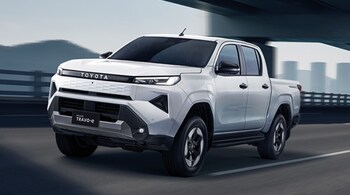
All-new “Tough and Agile” exterior, inspired by the latest Land Cruiser
Double-Cab body with electric power steering for improved precision and reduced steering kickback
Overhauled interior with dual 12.3-inch digital displays, wireless smartphone charging, and premium surface finishes
Enhanced safety tech with Toyota T-Mate: includes upgraded Safety Sense and new driver-assist functions like Low Speed Acceleration Suppression and Emergency Driving Stop System.
Interior and technology
The interior of the new Hilux takes cues from the latest Land Cruiser, focusing on improved quality and functionality. The cabin layout has been reworked with a horizontal dashboard design and modern digital interfaces.
Key highlights include:
- 12.3-inch customizable driver’s display
- 12.3-inch touchscreen infotainment system (depending on trim)
- Shift-by-wire selector for the BEV variant
- Wireless charger and multiple USB ports
- MyToyota app offering remote connectivity and vehicle data access
The connected features enable fleet operators to monitor up to 10 vehicles, tracking details such as fuel level, battery charge status, trip history, and real-time location.
Toyota Hilux EV Safety Features
The ninth-generation Hilux also introduces an expanded version of Toyota Safety Sense, bringing in several new features and improvements.
New systems include:
- Low-Speed Acceleration Suppression
- Proactive Driving Assist (PDA)
- Emergency Driving Stop System (EDSS)
- Blind Spot Monitor
- Safe Exit Assist
- Driver Monitor Camera
- Over-the-air (OTA) updates for system upgrades
In a first for the model, the Hilux now uses electric power steering (EPS), which enhances control accuracy and reduces steering effort. The system also helps minimise kickback during off-road driving.
Variant Roadmap
Full battery-electric (Hilux BEV) launches first in December 2025 (Europe, Asia-Pacific, select global markets, but not the US)
Plug-in hybrid (diesel 48V mild-hybrid) and ICE options continue for varied market needs
Hydrogen fuel cell version confirmed for 2028
Unique Highlights
Retains rugged body-on-frame durability and off-road focus
Optimized for both urban and remote work, promising “best-in-class” charging times (full specs pending)
Designed to appeal to both traditional Hilux buyers and those seeking sustainable utility vehicles
Toyota’s multipath approach means different regions will receive different versions of the new Hilux. While the BEV and 48V hybrid will dominate most markets, internal combustion engines will continue to be offered in Eastern Europe to suit local needs.
This diversification aligns with Toyota’s view that no single technology fits all markets, and a mix of powertrains remains necessary during the global transition to cleaner mobility. The Hilux EV marks a milestone for Toyota’s electrification, aiming to blend reliable utility with modern, environmentally conscious technology while keeping the truck’s legendary robustness intact.